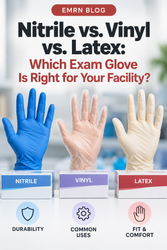
Nitrile vs Vinyl vs Latex gloves: How to Choose Exam Gloves for Your Facility
Posted by Mark M on 7th Oct 2026
Choosing an exam glove is not only about selecting a size and ordering another case.
Different glove materials can provide different levels of stretch, tactile feel, durability and resistance to tearing. Cost, staff preference and the type of work being performed can also influence which glove makes the most sense.
For many healthcare facilities, clinics, laboratories, workplaces and care environments, the three most familiar disposable glove materials are nitrile, vinyl and latex.
This guide breaks down the practical differences between them so purchasing teams can compare options more easily.
Nitrile, Vinyl and Latex at a Glance
Why Nitrile Has Become a Popular All-Around Choice
Nitrile gloves are manufactured from a synthetic rubber material and are widely used across healthcare, laboratory, cleaning and other professional environments.
One of nitrile's biggest advantages is its balance of durability and flexibility. Modern nitrile gloves can provide a close fit while offering good resistance to punctures and tearing during normal use.
Often selected when users want a glove that can stand up to routine handling and frequent use.
Quality nitrile gloves are designed to conform to the hand while maintaining flexibility.
Nitrile provides an alternative for environments looking to avoid natural-rubber latex gloves.
Where Vinyl Gloves May Fit Into Your Supply Program
Vinyl gloves are made from PVC-based synthetic material. They tend to have a looser fit and less elasticity than nitrile or latex.
Because of these differences, vinyl gloves may be considered for certain short-duration tasks where a highly form-fitting glove is not required.
When comparing vinyl gloves, consider:
It is the glove that fits the task and the user.
Why Latex Is Known for Fit and Tactile Sensitivity
Latex gloves are manufactured from natural rubber latex and have long been valued for their elasticity, close fit and tactile feel.
Their ability to stretch and conform closely to the hand can make them comfortable for tasks where dexterity is important.
However, latex sensitivity and allergy considerations mean many organizations now use nitrile or another synthetic material instead. Facilities should follow their own policies and product requirements when choosing glove materials.
Latex naturally conforms closely to the hand.
Its close fit can support tasks requiring fine hand movements.
Natural-rubber latex may not be appropriate for all users or facilities.
Comparing Nitrile, Vinyl and Latex Exam Gloves
| Feature | Nitrile | Vinyl | Latex |
|---|---|---|---|
| Material | Synthetic rubber | PVC-based synthetic material | Natural rubber latex |
| Fit | Close and flexible | Generally looser | Very close and elastic |
| Durability | Generally strong | Best matched to appropriate lower-demand tasks | Flexible with good elasticity |
| Contains Natural Latex | No | No | Yes |
Individual glove specifications vary by manufacturer and product. Always review the specifications and intended use of the glove being purchased.
Do Not Overlook Glove Size
Choosing the correct material is only part of selecting an examination glove. Size can have a major effect on comfort and usability.
A glove that is too small may feel restrictive and place unnecessary stress on the material. A glove that is too large can move around on the hand and reduce dexterity.
When stocking multiple glove sizes:
6 Questions to Ask When Choosing Exam Gloves
Keep the exact glove type and sizes your team uses easy to reorder.
Clinics, healthcare organizations and businesses can simplify repeat purchasing by documenting preferred glove materials, sizes, brands and item numbers.
Explore Business Medical SuppliesFind disposable gloves for your clinic, facility or workplace.
EMRN supplies healthcare organizations, clinics, EMS teams, long-term care facilities, businesses and workplaces across Canada with examination gloves, PPE and a broad selection of medical supplies.
Frequently Asked Questions About Exam Gloves
What is the difference between nitrile and vinyl gloves?
Nitrile is a synthetic rubber material that generally provides a closer fit and greater flexibility and durability than vinyl. Vinyl is a PVC-based material that tends to fit more loosely and may be appropriate for certain shorter-duration or lower-demand tasks.
Are nitrile gloves latex-free?
Nitrile gloves are made from synthetic rubber rather than natural rubber latex. Product specifications should still be reviewed when purchasing for environments with specific material requirements.
Why are latex gloves known for a close fit?
Natural rubber latex is highly elastic, allowing latex gloves to stretch and conform closely to the hand. This can provide strong tactile sensitivity and dexterity.
Does glove size matter?
Yes. A properly fitting glove can improve comfort and dexterity. Gloves that are excessively tight or loose may be less comfortable and more difficult to work in.
Where can I buy exam gloves in Canada?
EMRN offers examination gloves and other PPE for clinics, healthcare facilities, EMS organizations, long-term care facilities, businesses and workplaces across Canada.
Compare materials. Choose the right sizes. Keep your team stocked.
Explore EMRN's selection of examination gloves and PPE for healthcare organizations, clinics and businesses across Canada.
Shop Exam Gloves