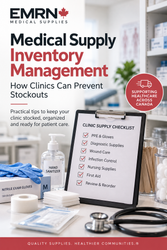
Medical Supply Inventory Management: How Clinics Can Prevent Stockouts
Posted by Mark M on 10th Sep 2026
Medical supply inventory management is not only about knowing what is sitting on a shelf. It is about making sure the products your team depends on are available before they are needed.
In a busy clinic, nursing station, physician office, long-term care facility or other healthcare environment, dozens of consumable products may move through treatment rooms every day. Gloves are opened. Gauze is used. Disinfectants are replaced. Diagnostic accessories disappear one box at a time.
Without a consistent restocking process, it becomes easy to discover that something is missing only when the last package has already been used.
The good news is that effective clinic inventory management does not necessarily require a complicated system. A few simple habits can make medical supply ordering more predictable and help reduce both shortages and unnecessary excess inventory.
6 habits that can make medical supply restocking easier
Identify Your High-Use and Critical Medical Supplies
Not every product in a medical supply room deserves the same level of attention.
Begin by identifying the supplies that are consumed regularly or would create an immediate problem if they were unavailable. These products should receive the closest inventory monitoring.
Frequently used sizes may move considerably faster than others.
Disinfectants, wipes and hand-hygiene products often require regular replenishment.
Gauze, tape, dressings and related products may be used across several treatment areas.
Disposable or replaceable components can be easy to overlook until they run out.
Your high-priority list should reflect what your organization actually uses. A family practice, EMS service, long-term care facility and specialty clinic may have very different critical items.
Browse Exam Gloves →Set Minimum Stock and Reorder Levels
Waiting until the last box is opened to place an order creates unnecessary risk.
Instead, determine a minimum quantity for important supplies. When inventory reaches that level, it becomes the signal to reorder.
The right reorder level depends on factors such as:
High-use items may need a larger safety quantity than specialty products that are consumed less frequently.
Minimum stock levels turn a visual guess into a repeatable purchasing process.
Organize Medical Supply Storage for Faster Restocking
An inventory system becomes much harder to maintain when the same product is stored in five different locations.
Whenever practical, create consistent locations for commonly used supplies and make those locations easy for staff to identify.
Label Shelves & Bins
Consistent locations make shortages easier to spot during routine checks.
Create Central Reserve Stock
Maintain a central backup area for frequently used items instead of overfilling individual rooms.
Keep Similar Products Together
Grouping products logically can make both stocking and counting more efficient.
Storage should also account for manufacturer instructions, packaging requirements and any facility-specific procedures that apply to individual products.
Watch Expiration Dates and Rotate Inventory
Overstocking may solve one problem while creating another.
Products with expiration dates should be reviewed regularly and managed according to manufacturer information and your organization's policies. Keeping older appropriate inventory accessible ahead of newer stock can also make rotation easier.
Emergency and specialty products deserve particular attention because they may sit unused for longer periods.
Having a product in the cabinet is not enough. Your inventory process should help ensure the supply is appropriate and ready when it is needed.
Review Medical Inventory by Category
Breaking a large supply room into categories can make inventory reviews easier to manage.
Kits, refills and everyday first aid products.
Wound CareDressings, gauze, tape and wound management supplies.
DiagnosticsMonitoring equipment and diagnostic essentials.
Infection ControlProducts supporting hygiene and environmental infection control.
Nursing SuppliesEveryday products for clinical and patient-care workflows.
Shop All SuppliesBrowse the complete EMRN medical supply catalogue.
Assign Responsibility for Supply Checks
An inventory process without a clear owner can quickly become everyone's job and, eventually, no one's job.
Determine who is responsible for checking specific areas and how shortages should be communicated.
Room-Level Check
Notice obvious shortages while rooms and work areas are being reset.
High-Use Inventory
Review products that move quickly and may require frequent replenishment.
Full Supply Review
Review slower-moving products, reserve inventory and dated supplies.
The exact schedule should match the size, services and purchasing volume of your organization.
Record the Exact Products Your Team Uses
One of the easiest ways to simplify repeat ordering is to maintain an accurate record of the products your organization already uses.
Instead of writing only “gloves” or “gauze” on a supply list, record enough information to identify the correct item.
Useful information to record:
This becomes especially useful when purchasing responsibilities move between staff members. A documented supply list reduces the need to rediscover the correct size, package or SKU every time an order is placed.
7 Common Medical Supply Inventory Mistakes
Small inventory habits can have a surprisingly large impact on day-to-day clinic operations.
A closed first aid kit can be one of the easiest supply areas to overlook.
A kit may still be hanging on the wall even after individual components have been used. Include first aid kits and emergency supply stations in periodic inventory reviews rather than assuming a closed container is complete.
Review your organization's requirements and procedures to determine the appropriate kit type, contents and inspection schedule.
Browse First Aid KitsA Practical Medical Supply Restocking Workflow
A basic four-step process can be enough for many organizations to build a more consistent approach to inventory.
Check
Review rooms and central storage on a consistent schedule.
Compare
Compare current quantities with established minimum levels.
Reorder
Order the exact products and quantities required before stock is exhausted.
Restock
Return products to consistent locations and rotate inventory appropriately.
Make your next medical supply order easier to build.
EMRN supplies clinics, healthcare facilities, EMS teams, businesses and other organizations across Canada with medical products spanning first aid, nursing supplies, diagnostics, PPE, infection control, wound care, emergency response and everyday patient care.
Frequently Asked Questions About Medical Supply Inventory Management
What is medical supply inventory management?
Medical supply inventory management is the process of tracking, organizing, replenishing and reviewing the supplies used by a healthcare organization. The goal is to keep necessary products available while avoiding unnecessary excess inventory.
How can clinics prevent running out of medical supplies?
Clinics can identify high-use products, establish minimum stock levels, maintain appropriate backup inventory and reorder before supplies reach zero. Regular inventory checks and clearly assigned responsibilities can also help.
How often should medical inventory be checked?
The appropriate frequency depends on product usage and the organization. High-use products may require frequent checks, while slower-moving stock may be reviewed periodically. Dated and emergency supplies should also be included in a regular review schedule.
What information should be included on a clinic supply list?
A useful clinic supply list may include the product name, SKU, size, package quantity, preferred product or brand, minimum stock level, typical order quantity and storage location.
Why are minimum stock levels important?
Minimum stock levels provide a clear signal for when a product should be reordered. This can reduce reliance on memory or visual guesses and help prevent important supplies from reaching zero.
Where can Canadian clinics order medical supplies online?
EMRN offers medical supplies for clinics and healthcare organizations across Canada, including first aid products, nursing supplies, diagnostics, wound care, PPE, infection-control supplies, emergency products and other healthcare essentials.
Keep the medical supplies your team relies on ready before the shelf is empty.
Explore EMRN's selection of medical supplies for clinics, hospitals, EMS teams, long-term care, home care, businesses and healthcare organizations across Canada.
Explore EMRN Medical Supplies