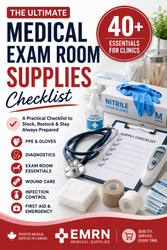
Medical Exam Room Supplies Checklist: 40+ Essentials for Clinics in Canada
Posted by Mark B on 2nd Sep 2026
An exam room may look simple from the outside: an examination table, a stool, a few instruments and a cabinet of supplies. In practice, dozens of individual products may be used throughout a typical day.
Gloves need to be available in the right sizes. Diagnostic equipment should be easy to locate. Wound care products, infection-control supplies and everyday consumables need to be replenished before they disappear.
That is why a practical medical exam room supplies checklist can be useful for family practices, walk-in clinics, specialty offices, nursing stations, outpatient facilities and other healthcare environments.
The exact products required will depend on the services your organization provides, your internal procedures and applicable healthcare requirements. This guide is designed as a practical starting point for building or reviewing a clinic supply list.
What does a well-stocked medical exam room need?
PPE & Examination Gloves
Disposable gloves are among the highest-use products in many healthcare environments, which makes them one of the first categories to consider when stocking an exam room.
Commonly stocked for routine patient examinations and clinical tasks.
Keep appropriate sizes available so staff do not have to work with poorly fitting gloves.
Stock according to the procedures and patient-care activities performed in your facility.
Protective eyewear and face protection may be appropriate for specific tasks and procedures.
Diagnostic Equipment & Supplies
Diagnostic products are at the centre of many routine patient assessments. The equipment required will vary by practice, but common exam-room items can include:
If your clinic uses equipment with disposable accessories—such as thermometer probe covers or other single-use components—include those consumables on the same reorder list as the equipment itself.
Owning the diagnostic device is only part of the equation. Replacement cuffs, disposable covers, batteries and compatible accessories can be just as important to everyday use.
If an examination, dressing change or procedure requires several products, make sure the supporting supplies are stocked together.
```Patient Examination Supplies
Some of the least complicated products in an exam room are also the ones used most frequently.
Table Paper & Covers
Keep appropriate examination table paper or other clinic-approved barriers readily available.
Gowns & Drapes
Select the styles and sizes appropriate for the examinations performed in your clinic.
Tissues & Disposable Products
Small everyday consumables are easy to overlook when building a clinic supply order.
Depending on the services offered, an exam room may also require specimen supplies, applicators, tongue depressors, lubricating jelly, disposable measuring products or procedure-specific consumables.
Wound Care & Dressing Supplies
Even clinics that do not specialize in wound care may keep a selection of basic dressings and first-line wound-care products available.
It is often useful to stock several dressing sizes rather than relying on one product for every situation. Keep sterile products organized and review packages regularly for damage and expiration dates.
Browse Adhesive Wound Dressings →Infection Control & Cleaning Supplies
Infection-control products should be easy for staff to access where they are actually used. If supplies are stored too far away, room turnover becomes less convenient and backup stock may be harder to monitor.
Common items to review:
- Hand sanitizer
- Hand soap
- Appropriate surface disinfectants
- Disinfecting wipes
- Disposable towels or cleaning materials
- Waste containers and liners
- Sharps disposal containers where required
- Additional PPE used for cleaning or clinical procedures
What should staff notice when resetting an exam room?
Room turnover can also double as a quick inventory check. Staff do not need to count every item after every patient, but they can identify obvious shortages before the next person enters the room.
Are commonly used sizes available?
Is there enough paper or covering for the next patients?
Are the necessary accessories present?
Are disinfectants and disposable materials stocked?
General Medical Consumables
A clinic may have its major equipment in place and still lose time because a low-cost consumable is missing.
Build a list of the small items used repeatedly in your specific practice. Depending on your services, examples may include:
The best checklist is not necessarily the longest one. It is the one that accurately reflects the products your team actually uses.
First Aid & Emergency Supplies
First aid and emergency supplies should be considered separately from the products consumed during routine appointments.
Your clinic's exact emergency inventory will depend on the facility, services offered, staffing, patient population and applicable requirements. The important part from an inventory perspective is knowing:
Emergency products should not become "out of sight, out of mind" simply because they are used less frequently than routine consumables.
Storage, Organization & Backup Stock
Having the right supplies does not help much if staff cannot find them.
Organize products so that frequently used items are visible, easy to access and consistently returned to the same location.
Consistent locations reduce the time spent searching for routine products.
Keep reserve inventory available for high-use products instead of filling every room with excess stock.
Review dated products and use appropriate stock rotation practices.
Medical Exam Room Supplies: Master Checklist
Use this as a starting template and remove or add products based on your own clinic's services.
PPE
Diagnostics
Exam Room
Wound Care
Infection Control
General Supplies
Setting up a new clinic requires more than filling one exam room.
A full clinic setup may include several exam rooms, a treatment area, waiting room, staff areas, storage, diagnostics, infection-control products, first aid equipment and specialty supplies related to the services being offered.
Building the supply list by room can make a large purchasing project easier to organize and can reduce the chance of discovering missing everyday products immediately before opening.
Explore New Clinic & Facility Setup ```Turn Your Checklist Into a Reordering System
A checklist is most useful when it becomes part of an ongoing process rather than something used only when a clinic first opens.
```Record Exact Products
Keep SKUs and preferred sizes for products your organization purchases repeatedly.
Choose Minimum Levels
Determine how low a frequently used product can get before a reorder should be triggered.
Assign Responsibility
Make it clear who checks rooms, treatment areas and central storage.
Review Regularly
Adjust quantities when staffing, services, patient volume or product preferences change.
Restocking a clinic should be easier than rebuilding your supply list every time.
Browse EMRN for medical supplies across PPE, exam gloves, diagnostics, wound care, infection control, nursing, first aid, emergency response, medical equipment and other everyday healthcare categories.
```Frequently Asked Questions About Medical Exam Room Supplies
What supplies should be kept in a medical exam room?
Common exam-room supplies may include examination gloves, basic diagnostic equipment, table paper, patient gowns, infection-control products, gauze, dressings, medical tape and other consumables related to the services performed in the room. Exact requirements vary by clinic.
How often should clinic supplies be checked?
High-use consumables may need frequent checks, while slower-moving products can be reviewed on a different schedule. Many clinics benefit from combining quick room checks with a larger recurring inventory review.
What are the most commonly used medical supplies in a clinic?
Usage varies by practice, but disposable gloves, examination table supplies, disinfecting products, gauze, dressings, medical tape and other routine patient-care consumables are frequently used in many clinical environments.
How can a clinic avoid running out of medical supplies?
Keep a list of frequently purchased SKUs, establish minimum stock levels, maintain backup inventory for high-use products and assign responsibility for regular supply checks.
What should be included when setting up a new clinic?
New clinic planning typically extends beyond exam-room supplies. Depending on the facility, the project may include diagnostics, treatment supplies, PPE, infection-control products, medical equipment, first aid and emergency products, storage, patient-care supplies and specialty items for the services offered.
Can medical supplies for multiple exam rooms be ordered together?
Yes. When several rooms use the same products, consolidating purchasing can make inventory easier to organize. Keep enough central backup inventory to replenish individual rooms as products are consumed.
Does EMRN supply medical products for clinics and healthcare organizations in Canada?
EMRN offers medical supplies and equipment across a wide range of healthcare categories, with options for individual purchases, routine clinic ordering and larger organizational supply needs.
Build a clinic supply list that is easy to stock, easy to find and easy to reorder.
Explore medical supplies for clinics, physician offices, healthcare facilities, nursing teams, first aid programs, home care and other Canadian healthcare organizations.
Explore EMRN Medical Supplies