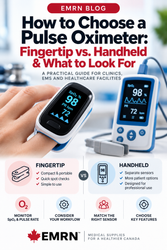
How to Choose a Pulse Oximeter: Fingertip vs Handheld Guide
Posted by Mark B on 28th Oct 2026
A pulse oximeter is a non-invasive device used to estimate blood oxygen saturation, commonly displayed as SpO₂, along with pulse rate.
At first glance, selecting one may seem straightforward. However, a small fingertip pulse oximeter and a professional handheld system can be designed for very different workflows.
Device portability, intended use, sensor options, patient population, display readability, battery requirements and whether measurements are taken occasionally or repeatedly can all influence which type makes the most sense.
This guide explains the main differences and the features worth comparing before purchasing pulse oximetry equipment.
Fingertip or Handheld Pulse Oximeter?
How Will the Pulse Oximeter Be Used?
Before comparing models, define what the device actually needs to do.
A clinic that needs an easy-to-carry device for occasional adult spot checks may have different requirements from an EMS team, hospital department or healthcare facility that needs multiple sensor options or more frequent measurements.
Portability, quick measurements and simple operation may be important.
Durability, portability and visibility in changing environments may matter more.
Sensor choices and repeat-use workflows may influence device selection.
Compact size, battery life and easy transport can become priorities.
When Does a Fingertip Pulse Oximeter Make Sense?
Fingertip pulse oximeters combine the sensor, display and electronics into one compact unit that clips directly onto the finger.
Their simplicity and small size can make them convenient for quick measurements, portable equipment bags and settings where staff need a device that is easy to carry between rooms.
When comparing fingertip models, look at:
Another may need a professional handheld system.
Why Choose a Handheld Pulse Oximeter?
Professional handheld pulse oximeters separate the monitor from the patient sensor.
This design can provide greater flexibility when a facility needs different sensor configurations, wants the display positioned independently from the measurement site or requires equipment designed for repeated professional use.
The sensor and monitor do not need to be one integrated unit.
Compatible systems may support multiple sensor types or patient sizes.
Designed for settings where the device may be used repeatedly throughout the day.
The monitor can often be positioned where staff can read it easily.
Consider the Patient Population Before Choosing a Sensor
On systems that use external sensors, the monitor is only one part of the purchase.
Sensor design, patient size, measurement site and whether the sensor is reusable or intended for limited use may all affect which accessories are appropriate.
Do not assume every SpO₂ sensor works with every pulse oximeter.
Confirm the monitor manufacturer, model, connector, sensor type and intended patient population before ordering replacement sensors or accessories.
Check the Device's Intended Use
Not every device sold as a pulse oximeter is intended for the same purpose.
Some products are designed and marketed for professional or medical use, while others are sold for general wellness, fitness or recreational purposes.
Facilities purchasing equipment for clinical workflows should review the manufacturer's stated intended use, specifications, instructions and applicable regulatory information rather than selecting a device based only on price or appearance.
Pulse Oximeters Have Important Limitations
Pulse oximeters estimate oxygen saturation using light. Like other measurement devices, they have limitations and readings should be interpreted in the context of the patient and the device's instructions.
Factors such as movement, poor circulation, skin temperature, nail polish and other patient or environmental factors may interfere with obtaining a reliable reading.
For a better-quality measurement:
Fingertip vs. Handheld Pulse Oximeter
| Feature | Fingertip | Handheld |
|---|---|---|
| Portability | Very compact | Portable, but larger |
| Sensor | Integrated into device | Usually separate |
| Sensor Choices | Generally limited | May support multiple compatible sensors |
| Typical Workflow | Quick spot checks | Professional and more flexible workflows |
| Display | Built into fingertip unit | Larger separate monitor |
8 Questions to Ask Before Buying a Pulse Oximeter
Match pulse oximetry equipment to your actual workflow.
Keeping the device model, compatible sensor numbers and replacement accessories documented can simplify repeat purchasing for clinics, healthcare facilities and EMS organizations.
Explore Business Medical SuppliesFind pulse oximeters and monitoring equipment for your facility.
EMRN supplies clinics, EMS teams, healthcare organizations, long-term care facilities and businesses across Canada with pulse oximetry equipment, diagnostic products and medical supplies.
Frequently Asked Questions About Pulse Oximeters
What does a pulse oximeter measure?
A pulse oximeter uses light to non-invasively estimate blood oxygen saturation, commonly displayed as SpO₂, and pulse rate.
What is the difference between a fingertip and handheld pulse oximeter?
A fingertip model combines the display, sensor and electronics in one compact unit. Handheld systems normally use a separate monitor and sensor and may support a wider variety of compatible sensor configurations.
What should I look for when buying a pulse oximeter?
Consider intended use, patient population, portability, sensor options, display readability, power requirements, replacement accessories and the manufacturer's specifications.
Can movement affect a pulse oximeter reading?
Movement can interfere with pulse oximetry measurements. Users should follow the manufacturer's instructions, position the sensor correctly and keep the measurement site still while obtaining a reading.
Are all pulse oximeter sensors interchangeable?
No. Sensor compatibility varies by manufacturer, monitor, connector and sensor type. Compatibility should always be confirmed before ordering a replacement sensor.
Where can I buy pulse oximeters in Canada?
EMRN supplies pulse oximetry and diagnostic equipment for clinics, EMS organizations, healthcare facilities, long-term care facilities and businesses across Canada.
Fingertip or handheld? Start with how the device will be used.
Explore EMRN's selection of pulse oximetry, monitoring and diagnostic equipment for healthcare organizations across Canada.
Explore Monitoring Equipment