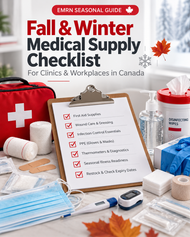
Fall & Winter Medical Supply Checklist for Clinics & Workplaces in Canada
Posted by Mark M on 30th Sep 2026
A seasonal medical supply checklist is a simple way to identify gaps before colder weather changes daily routines.
Fall and winter can bring more indoor activity, slippery conditions, dry or irritated skin, seasonal illnesses and increased use of certain first aid, infection-control and diagnostic products.
That does not mean every organization needs to dramatically increase inventory. The goal is to review the products your team already depends on and confirm that important supplies are available, organized and ready to use.
Whether you purchase for a medical clinic, long-term care facility, workplace, school, EMS organization or other healthcare environment, the following checklist provides a practical starting point for seasonal preparedness.
Start With Four Simple Questions
A quick seasonal review does not need to be complicated. Begin by checking the condition, quantity and accessibility of the products your organization already uses.
Review First Aid Kits Before Seasonal Needs Change
Workplace and facility first aid supplies should be reviewed regularly rather than only after a product has been used.
Before winter, inspect kits and first aid stations for products that have been consumed, damaged or passed their expiration date. Pay particular attention to frequently used items that may disappear one at a time without triggering a full kit review.
Check common sizes and specialty dressings used by your organization.
Replace opened, depleted or damaged packages where appropriate.
Make sure the sizes staff need are actually available.
Check Frequently Used Infection-Control Supplies
More time spent indoors can increase the importance of maintaining an organized supply of routine infection-control products.
Review the products used for hand hygiene, surface care, personal protection and everyday infection-control procedures. Facilities with supplies distributed across multiple rooms should check each location separately.
Products worth reviewing include:
is before someone urgently needs it.
Make Sure Wound-Care Supplies Are Easy to Access
Everyday cuts, abrasions and minor injuries do not follow a seasonal schedule, but winter conditions can create additional situations where wound-care products are needed.
Facilities should confirm that commonly used dressings, gauze, tape and related supplies are organized by size and type rather than stored together as one broad category.
Review frequently used products and sizes.
Identify products with damaged or compromised packaging.
Replace items according to your facility's procedures.
Make it easy for staff to identify the appropriate product.
Review Diagnostic Equipment and Accessories
Diagnostic equipment may be used year-round, but a seasonal supply review is a useful opportunity to confirm that frequently used devices and their accessories are complete and ready.
Check the products your organization relies on for routine assessments and make sure supporting accessories have not been overlooked.
Do not review only the main device.
Replacement cuffs, probes, covers, batteries, chargers, cases and other accessories can be just as important as the diagnostic equipment itself. Keep required accessories with or near the equipment whenever practical.
Medical Supply Categories to Review Before Winter
Organizing a seasonal review by category can make it easier to identify overlooked products.
Kits, refills, bandages and frequently used first aid products.
Wound CareDressings, gauze, tape and related wound-care products.
Exam GlovesReview stock individually by glove size and type.
Infection ControlRoutine hand hygiene, surface-care and infection-control products.
DiagnosticsDiagnostic equipment, accessories and replacement components.
Nursing SuppliesEveryday patient-care supplies and disposable products.
Check Emergency Supplies Before Severe Weather Arrives
Winter weather can occasionally affect transportation, staffing, deliveries and access to facilities. Organizations should consider whether their normal emergency supplies remain appropriate for their environment and operations.
The exact products required will differ considerably between a small office, medical clinic, industrial workplace and EMS organization, so emergency inventory should be based on the needs and procedures of the individual organization.
Know which items are most important if normal operations are disrupted.
Emergency supplies should be stored where appropriate staff can find them.
Update supplies as organizational needs and procedures change.
Make Seasonal Supplies Easy for Staff to Find
Having enough inventory is only useful when staff know where it is stored.
As part of a fall supply review, look for duplicate storage locations, unlabeled bins and products that have been moved away from their normal location.
A well-organized medical supply area may include:
A Simple 5-Step Fall Medical Supply Check
A consistent review process can help prevent small inventory gaps from becoming urgent problems later.
Inspect
Review kits, cabinets, equipment and supply areas.
Count
Check quantities of frequently used products.
Check
Review condition, packaging and expiration dates.
Restock
Order products that fall below your normal needs.
Organize
Return supplies to clearly defined storage locations.
7 Medical Supply Details That Are Often Missed
A seasonal inventory review is a good opportunity to look beyond the obvious products.
Make seasonal and recurring medical supply orders easier to manage.
Keeping commonly purchased products, sizes and SKUs organized can make it easier to identify what needs restocking before the next busy period.
Explore Business Medical SuppliesPrepare your facility before winter arrives.
EMRN supplies clinics, healthcare organizations, EMS teams, long-term care facilities, workplaces and businesses across Canada with first aid, nursing, diagnostic, wound-care, infection-control, PPE and emergency medical supplies.
Frequently Asked Questions About Fall & Winter Medical Supplies
What medical supplies should be checked before winter?
Organizations may want to review first aid supplies, wound-care products, examination gloves, PPE, infection-control products, diagnostic equipment, accessories and other items that are important to their normal operations.
How often should workplace first aid supplies be checked?
Organizations should follow the requirements and internal procedures that apply to their workplace or facility. In addition to scheduled inspections, seasonal transitions can be a useful time to review kit contents and replace missing, depleted or expired products.
Why should clinics review medical supplies seasonally?
Seasonal reviews give clinics an additional opportunity to identify low stock, expired products, damaged packaging, missing accessories and storage issues before those supplies are needed.
What medical supplies are commonly overlooked?
Replacement batteries, chargers, diagnostic accessories, probe covers, less common glove sizes, products stored in secondary locations and rarely used emergency supplies can be easy to overlook during routine ordering.
Where can Canadian organizations order medical supplies online?
EMRN offers medical supplies for clinics, healthcare facilities, EMS teams, long-term care organizations, workplaces and businesses across Canada, including first aid, nursing, diagnostics, wound care, PPE and infection-control products.
Check. Restock. Organize. Be ready before winter.
Review the medical supplies your organization depends on, replace missing or depleted products and explore EMRN's selection of medical supplies for healthcare organizations and businesses across Canada.
Explore EMRN Medical Supplies