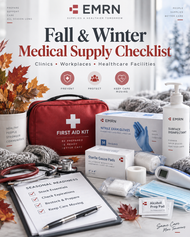
Fall & Winter Medical Supply Checklist
Posted by Mark M on 17th Sep 2026
Fall is an ideal time to take a fresh look at your organization's medical supply checklist.
Over the course of a busy year, individual products get used, moved between rooms, opened without being replaced or simply forgotten in storage. A first aid cabinet may look full from the outside while commonly used components are running low. A treatment room may still have examination gloves but be missing the size used most often. Backup wound-care supplies may be stored somewhere else entirely.
Seasonal preparation does not need to mean buying everything again. The goal is to identify the products your team actually relies on, confirm that appropriate quantities are available and make sure supplies are organized where staff expect to find them.
Use this fall and winter medical supply checklist as a practical starting point for clinics, physician offices, healthcare facilities, workplaces, schools, EMS teams, long-term care environments and other organizations across Canada.
8 medical supply areas worth reviewing this fall
Inspect First Aid Kits Before You Assume They Are Complete
First aid kits are easy to overlook because the container itself may remain mounted on a wall or stored in the same cabinet for months.
Open each kit and review the contents. Frequently used items may have been removed without the entire kit ever appearing “empty.”
Check commonly used sizes and package quantities.
Review assorted sizes rather than counting only unopened boxes.
Partially used rolls can make stock appear higher than it really is.
Review disposable components that may disappear one at a time.
Your required contents and inspection schedule will depend on the environment, applicable requirements and your organization's own procedures.
Browse First Aid Kits →Review Exam Gloves and Other Frequently Used PPE
PPE inventory should be reviewed by actual product, size and usage—not simply by the number of boxes sitting on a shelf.
Examination gloves are a good example. An organization may appear well stocked overall while one frequently used glove size is almost gone.
Items to review may include:
Ask, “Do we have enough of the exact version our team actually uses?”
Size, packaging, location and typical usage can matter just as much as the product category.
Replenish Infection-Control and Hygiene Supplies
Infection-control products can be consumed across multiple rooms and departments, making them especially easy to underestimate during a quick visual inventory check.
Rather than reviewing only the central storage area, check the locations where these products are actually used.
Check Point-of-Use Stock
Products kept in treatment rooms may run low even when central storage still has inventory.
Review Common Stations
Frequently accessed areas may consume products faster than expected.
Confirm Backup Quantities
Keep appropriate reserve inventory organized and clearly identified.
Build a Reliable Wound Care Supply Area
Wound care is another category where the phrase “we have gauze” may not provide enough information.
Different treatment situations may require different sizes, formats or products. Review the exact wound-care supplies used by your organization and confirm that frequently used items are readily available.
Review the sizes and types your facility uses.
Check both opened areas and reserve inventory.
Count usable stock rather than partially consumed rolls alone.
Include accessories used during routine wound-care workflows.
Build Your Fall Restock List by Category
Reviewing supplies one category at a time can make a large seasonal inventory check much easier to manage.
Kits, refills and everyday first aid essentials.
Wound CareDressings, gauze, tape and related supplies.
Exam GlovesReview high-use sizes and backup quantities.
Infection ControlProducts for hygiene and environmental infection-control workflows.
DiagnosticsMonitoring products and diagnostic essentials.
Nursing SuppliesEveryday supplies for patient-care workflows.
Do Not Forget Diagnostic Equipment and Accessories
Diagnostic equipment often remains in service for much longer than disposable supplies, but the accessories associated with it may need more frequent attention.
A seasonal review is a good opportunity to confirm that equipment is available where expected and that commonly replaced or disposable components have not been overlooked.
Equipment Availability
Confirm commonly used equipment is stored in its expected location.
Accessories
Check disposable and replaceable components used with diagnostic equipment.
Exact Product Details
Keep model, size or SKU information available for easier repeat ordering.
Review Nursing and Patient-Care Supplies
Nursing and patient-care products often include many small consumable items that can be difficult to track collectively.
Instead of approaching the category as one large inventory count, review products according to where and how they are used.
Include Emergency Supplies in Your Seasonal Review
Emergency products may be used less frequently than everyday clinical supplies, which is exactly why they deserve a deliberate review.
Items that remain untouched for long periods can be easier to forget during routine restocking.
For emergency and backup supplies, ask:
Always follow manufacturer information, applicable requirements and your organization's own procedures when inspecting, storing or replacing emergency medical products.
Organize Storage and Review Dated Products
Finding enough inventory is only part of seasonal medical supply preparation. The supplies also need to be organized in a way that helps staff locate and rotate them appropriately.
Give frequently used products consistent locations.
Keep reserve stock visible and easy to count.
Include appropriate dated products in scheduled inventory reviews.
Follow manufacturer information and facility procedures.
A well-organized storage area also makes future counts easier because staff can see what is available without searching several rooms or cabinets.
A Simple 5-Step Fall Medical Supply Review
You do not need to count an entire facility at once. Break the review into repeatable steps.
Walk Through
Review treatment rooms, offices, first aid stations and central storage.
Count
Focus on the exact products and sizes your team uses most.
Inspect
Review packaging, organization and dated inventory where applicable.
Restock
Replace missing or low-stock items before they become urgent.
Document
Record SKUs and preferred products to make the next order faster.
8 Medical Supply Restocking Mistakes to Watch For
A seasonal review is particularly useful for finding the small inventory problems that build up over time.
Make recurring medical supply purchasing easier to manage.
Clinics, healthcare facilities, businesses and other organizations can organize frequently purchased products by exact item number, size and package configuration to simplify future restocking.
Business & Bulk Medical SuppliesGet your medical supply list ready for fall and winter.
EMRN supplies clinics, healthcare facilities, EMS teams, long-term care, workplaces, businesses and other organizations across Canada with medical supplies including first aid, nursing products, diagnostics, PPE, infection control, wound care and emergency-response products.
Frequently Asked Questions About Fall & Winter Medical Supply Preparation
What medical supplies should a clinic review before winter?
A clinic may want to review first aid supplies, examination gloves and other PPE, infection-control products, wound-care supplies, diagnostic accessories, nursing supplies, emergency products and frequently used disposable items. The exact checklist should reflect the clinic's services and normal product usage.
How often should first aid kits be checked?
The appropriate inspection frequency depends on the organization, kit use, applicable requirements and internal procedures. Kits that are accessed frequently may require more frequent review than those used rarely.
Why should exam gloves be inventoried by size?
Different glove sizes can be consumed at very different rates. Counting all glove boxes together may hide a shortage of the size staff uses most often.
What should be included on a medical supply restocking list?
A useful restocking list can include the product name, SKU or item number, size, package quantity, preferred brand when applicable, normal order quantity, minimum stock level and storage location.
Should workplaces review first aid supplies seasonally?
Periodic reviews can help workplaces identify supplies that have been used, moved or require replacement. Organizations should determine their required kit contents and inspection schedule based on the applicable requirements and procedures for their workplace.
Where can Canadian organizations order medical supplies online?
EMRN offers medical supplies for clinics, workplaces, healthcare facilities, EMS teams, long-term care organizations and other customers across Canada, including first aid products, nursing supplies, diagnostics, wound care, PPE, infection-control products and emergency supplies.
A little preparation now can make your next medical supply order much easier.
Review the products your team uses, identify anything running low and explore EMRN's selection of medical supplies for healthcare organizations, businesses and workplaces across Canada.
Explore EMRN Medical Supplies