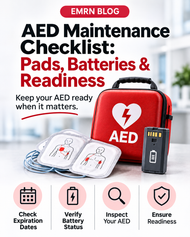
AED Maintenance Checklist: Pads, Batteries & Readiness
Posted by Mark M on 4th Nov 2026
Installing an automated external defibrillator is only the beginning of an AED readiness program.
The device and its accessories should remain ready for use over months and years. That means checking the AED itself, monitoring electrode-pad dates, keeping the appropriate battery installed, replacing supplies after use and confirming that the unit remains visible and accessible.
These checks can be especially important in workplaces, schools, healthcare facilities, municipal buildings, recreation centres and other locations where an AED may not be handled regularly.
This guide covers the core items organizations should include in an AED inspection and replacement routine.
Four Things Every AED Check Should Confirm
Confirm the Device Is Indicating Readiness
Many modern AEDs perform automatic self-tests and provide a visual or audible indication when attention is required.
During a routine inspection, look at the AED's status indicator and compare it with the manufacturer's instructions. If the unit displays a warning, produces an alert or otherwise indicates that service is required, investigate the issue before considering the device ready.
AED Pads Have Expiration Dates
AED electrode pads are disposable components and should not be treated as permanent accessories.
The adhesive and conductive materials inside the sealed package are designed for a defined shelf life. The expiration date should therefore be checked during routine inspections and recorded somewhere that makes upcoming replacements easy to track.
Locate the expiration date printed on the pad package or cartridge.
Make sure sealed packaging has not been opened or visibly damaged.
AED pads are model-specific. Confirm the exact compatible part number.
to discover that the pads have expired.
Track the AED Battery Before It Requires Replacement
AED batteries are another component that requires long-term tracking.
Battery life and replacement instructions vary by manufacturer and model. Some batteries include an install-by date, while others may use different labelling or replacement guidance.
Record the battery information when a new unit or replacement battery is installed rather than relying on someone to remember it several years later.
Keep these battery details in your AED record:
Know How Your AED Handles Pediatric Patients
Pediatric operation is not identical across AED brands and models.
Some systems use separate pediatric electrode pads or cartridges. Others use the same pads with a pediatric key or another device-specific method that changes the delivered therapy.
Never choose pediatric AED accessories based on appearance alone.
Confirm the exact AED model and the manufacturer's compatible pediatric setup before purchasing pads, cartridges, keys or other accessories.
Check More Than Just the AED
AED readiness also includes the equipment stored around the defibrillator.
Depending on your program and environment, supporting supplies may include a carrying case, wall cabinet, signage and a response or preparation kit.
Confirm that the cabinet opens properly and remains visible and accessible.
Make sure signage has not been removed, blocked or relocated.
Check any response supplies your organization's AED program keeps with the unit.
Know whether spare pads or batteries are required by your internal program.
Return the AED to Ready Status as Soon as Possible
AED readiness does not end after the device has been deployed in an emergency.
Electrode pads are single-use and must be replaced after use. Other supplies may also need replacement, and the device should be inspected according to its manufacturer's post-use instructions before it is returned to service.
A post-use review may include:
AED Readiness Checklist
7 Common AED Maintenance Mistakes
Track each AED by model, location, pads and battery.
Organizations with several AEDs can simplify replacement purchasing by recording each device's exact model, pad part number, battery part number, accessory dates and physical location.
Explore Business Medical SuppliesKeep your AED program ready before replacement supplies are needed.
EMRN supplies healthcare organizations, workplaces, schools, EMS teams, municipalities and businesses across Canada with AEDs, replacement pads, batteries, accessories, first aid products and emergency medical supplies.
Frequently Asked Questions About AED Maintenance
Do AED pads expire?
Yes. AED electrode pads have manufacturer expiration dates. The date should be checked regularly and replacement pads should be obtained before the installed set expires.
How often do AED batteries need to be replaced?
Replacement requirements vary by AED model and battery. Follow the manufacturer's instructions and keep the battery's installation and replacement information documented.
Do AED pads need to be replaced after use?
Yes. AED electrode pads are single-use and should be replaced after they have been used so the AED can be returned to ready status.
Are AED replacement pads universal?
No. Pads and pad cartridges are designed for specific AED models or product families. Confirm the manufacturer, AED model and compatible item number before ordering.
Do all AEDs use separate pediatric pads?
No. Pediatric operation varies by AED model. Some use separate pediatric pads or cartridges, while others use another manufacturer-specific method. Always follow the instructions for the exact AED.
Where can I buy AED replacement pads and batteries in Canada?
EMRN supplies AEDs, compatible replacement pads, batteries and accessories for healthcare facilities, workplaces, schools, EMS organizations, municipalities and businesses across Canada.
Check the AED. Track the dates. Replace supplies before they expire.
Explore EMRN's selection of AED supplies, emergency equipment and medical products for organizations across Canada.
Explore AED Supplies