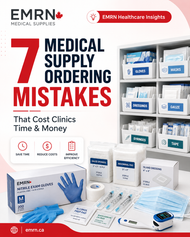
7 Medical Supply Ordering Mistakes That Cost Clinics Time and Money
Posted by Mark m on 27th Aug 2026
Medical supply purchasing works best when it is treated as an ongoing system rather than a series of last-minute orders.
For clinics, healthcare facilities, schools, long-term care organizations and other medical purchasers, a few simple changes can help reduce ordering errors, prevent shortages and make routine replenishment much easier.
Here are seven common medical supply ordering mistakes and practical ways organizations can avoid them.
A repeatable ordering process can help healthcare teams spend less time reacting to shortages and more time focusing on patient care and day-to-day operations.
Waiting Until the Last Box Is Opened
One of the most preventable purchasing problems is waiting until a product is nearly gone before placing another order.
High-use items such as examination gloves, gauze, dressings, masks, syringes, medical tape and disinfecting products can move through inventory surprisingly quickly.
This provides extra time for shipping, supplier availability, holidays and unexpected increases in usage.
Ordering Based Only on Price
Price matters, particularly for organizations buying medical supplies in larger quantities. But the lowest listed price does not always mean the lowest overall cost.
Before selecting a product, review:
Box, package and case quantities can vary significantly.
Check size, dimensions, material and product configuration.
Make sure accessories and replacement products match existing equipment.
Two products that look almost identical online may have different quantities, sizes or intended applications.
Not Keeping Track of the Products You Regularly Use
A team member may know the clinic needs "more gauze," "the usual gloves" or "another blood pressure cuff," but descriptions like these leave plenty of room for error.
For regularly purchased products, keep track of the:
SKUs are especially useful because they distinguish between products that may have very similar names or packaging.
Treating Every Department's Supplies as One Inventory
Larger clinics and facilities may have supplies spread across exam rooms, treatment areas, nursing stations, emergency carts and storage rooms.
Looking at everything as one large inventory can make it difficult to see where shortages actually exist.
Exam Room
Gloves, table paper, thermometers, diagnostic products and blood pressure equipment.
Treatment Room
Gauze, dressings, medical tape, PPE and procedure supplies.
First Aid & Emergency
Kit refills, bandages, cold packs, burn supplies and emergency PPE.
Organizing replenishment by room, department or function can make shortages easier to identify and responsibilities easier to assign.
Forgetting to Check Expiration Dates & Packaging
Knowing how many products are on the shelf is only part of an inventory review.
Depending on the product, teams may also need to check for:
- Expired products
- Products approaching expiration
- Damaged sterile packaging
- Opened or incomplete packages
- Products stored in the wrong location
Placing Too Many Small Orders
When every department places a separate order whenever something runs low, purchasing can become inefficient.
A simple replenishment schedule can help predictable products get reviewed together.
Trying to Find Every Product Without Assistance
Healthcare purchasing can become complicated quickly. Products may have multiple sizes, configurations, replacement parts, accessories and packaging options.
If you're trying to identify or source a product, having the following information can make the process much easier:
- Manufacturer
- Product name
- Model number
- Existing SKU
- Size or dimensions
- Photo or packaging image
- Intended application
EMRN can also assist organizations purchasing supplies for new clinics, expanding facilities, treatment rooms, healthcare organizations and other larger projects.
Explore New Clinic & Facility Setup →Build a Better Medical Supply Reordering Process
Identify High-Use Products
Determine which products are consumed every day or every week.
Record Exact SKUs
Keep the exact products your organization prefers easy to reference.
Set Reorder Points
Choose a minimum quantity that triggers the next purchase.
Assign Responsibility
Make it clear who is responsible for checking each supply area.
Schedule Reviews
Regular inventory checks are more reliable than waiting for an empty shelf.
Review & Adjust
Purchasing needs change as patient volume, staff, services and locations evolve.
From everyday consumables to larger facility purchases, EMRN helps Canadian healthcare organizations source the supplies they need.
Shop medical supplies across wound care, diagnostics, nursing, PPE, infection control, first aid, emergency response, training, home care and more.
Frequently Asked Questions About Medical Supply Ordering
How often should a clinic review its medical supply inventory?
The appropriate schedule depends on product usage. High-use consumables may need to be reviewed weekly, while slower-moving products and equipment can often be reviewed less frequently.
What is a medical supply reorder point?
A reorder point is the inventory quantity at which a new order should be placed. It helps create enough time for replenishment before existing inventory is completely used.
Why should clinics keep track of medical product SKUs?
SKUs help identify the exact product, size and configuration previously purchased, reducing the risk of accidentally ordering a similar but incorrect item.
Can EMRN assist with bulk or facility medical supply purchases?
Yes. EMRN works with clinics, healthcare organizations, businesses and other purchasers and can assist with bulk ordering, product sourcing and larger facility supply requirements.
Medical supply ordering doesn't have to become a last-minute scramble.
Explore medical supplies and equipment for clinics, healthcare facilities, EMS, long-term care, businesses, home care and other healthcare organizations across Canada.
Explore EMRN Medical Supplies